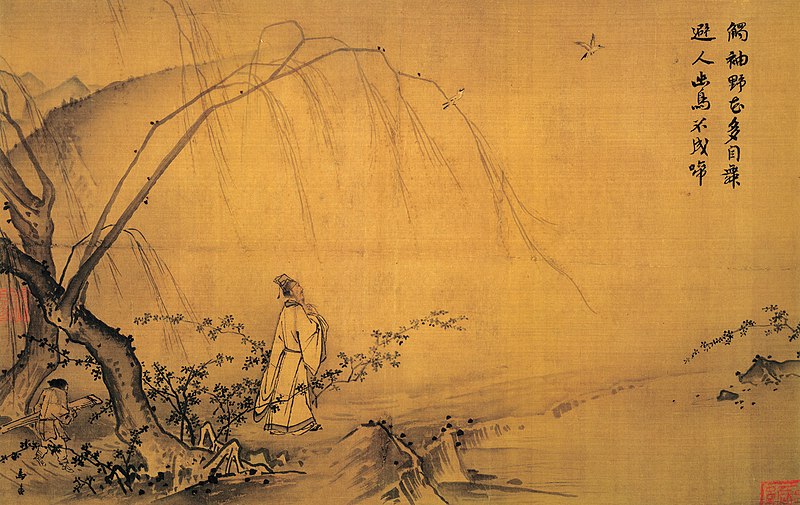
 |
| Walking on Path in Spring by Ma Yuan (马远 c.1190 - 1279年) |

Three Chinese Landscape Paintings:
1. Ma Yuan. On a Mountain Path in Spring. Southern Song. Book p. 66.
|
| Walking on Path in Spring by Ma Yuan (马远 c.1190 - 1279年) |

 |
| Zang Zeduan Detail: "Along the River During the Qingming Festival" (Song dynasty): Bridge |
 |
| Zang Zeduan "Along the River During the Qingming Festival" (Song dynasty) [Please click on the image directly above to examine the entire scroll] |
To "read" a Chinese painting is to enter into a dialogue with the past; the act of unrolling a scroll or leafing through an album provides a further, physical connection to the work. An intimate experience, it is one that has been shared and repeated over the centuries. And it is through such readings, enjoyed alone or in the company of friends, that meaning is gradually revealed.
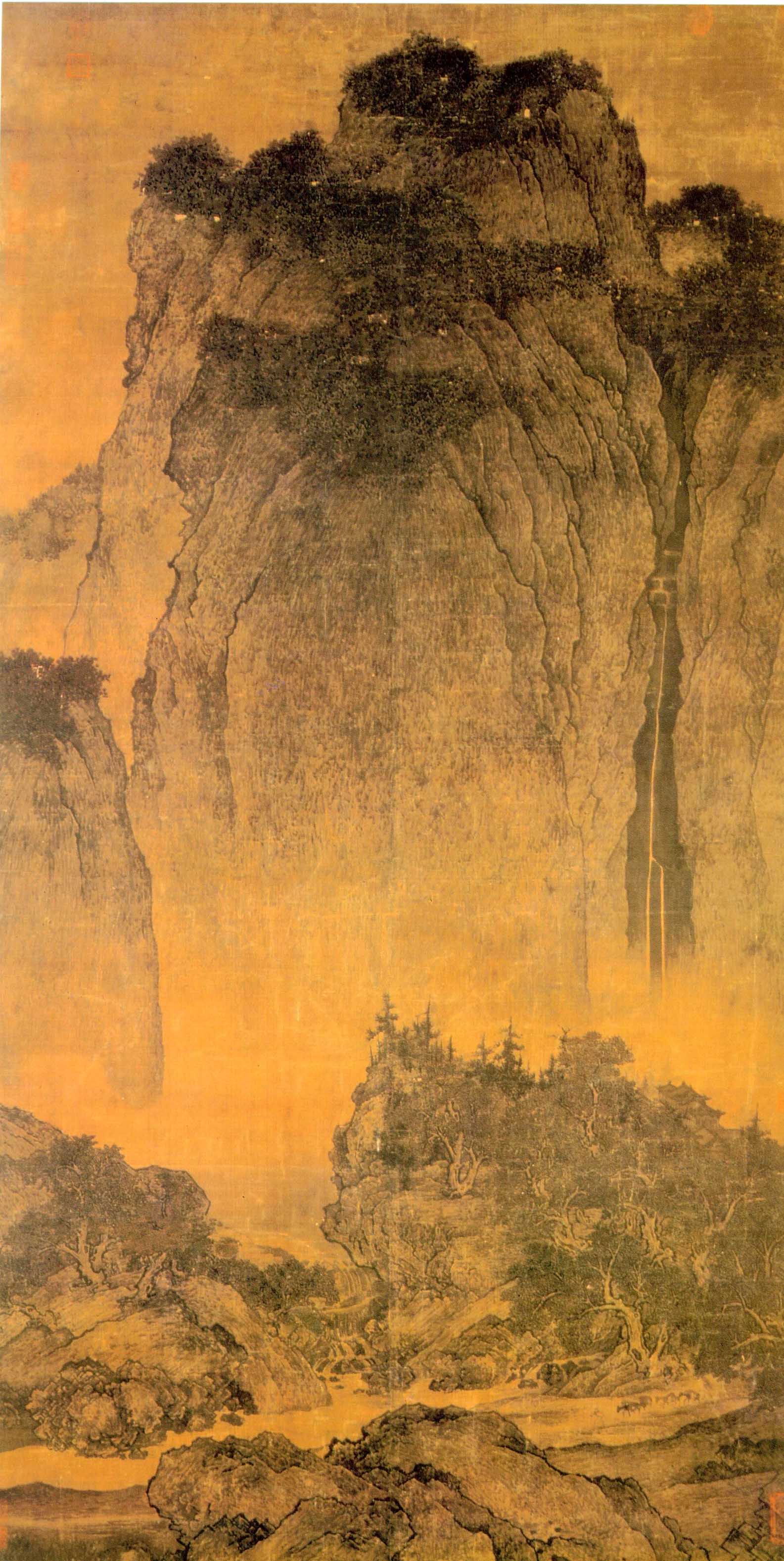
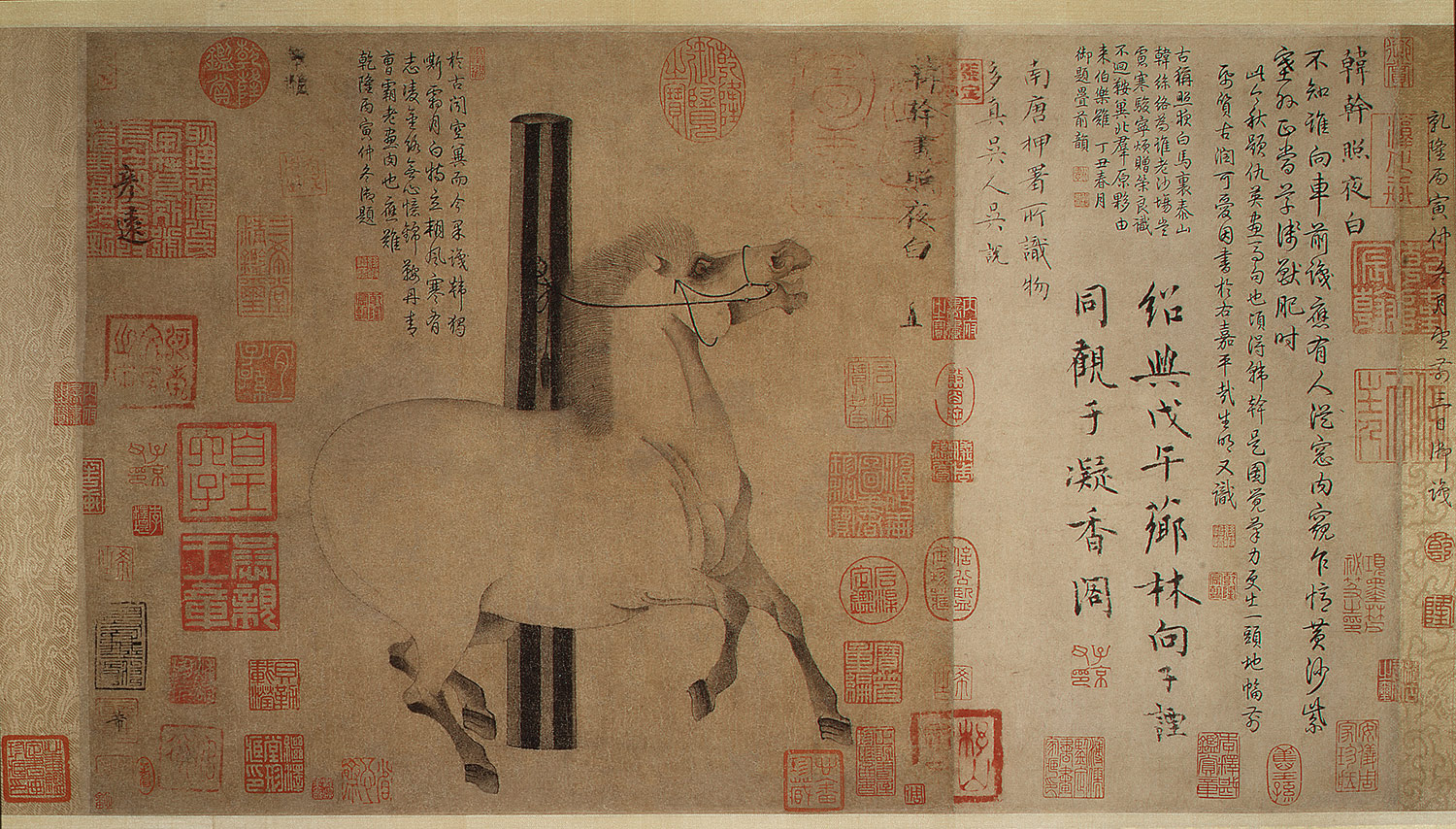 |
| Han Gan: "Night-Shining White" ca 750 (Tang dynasty) |
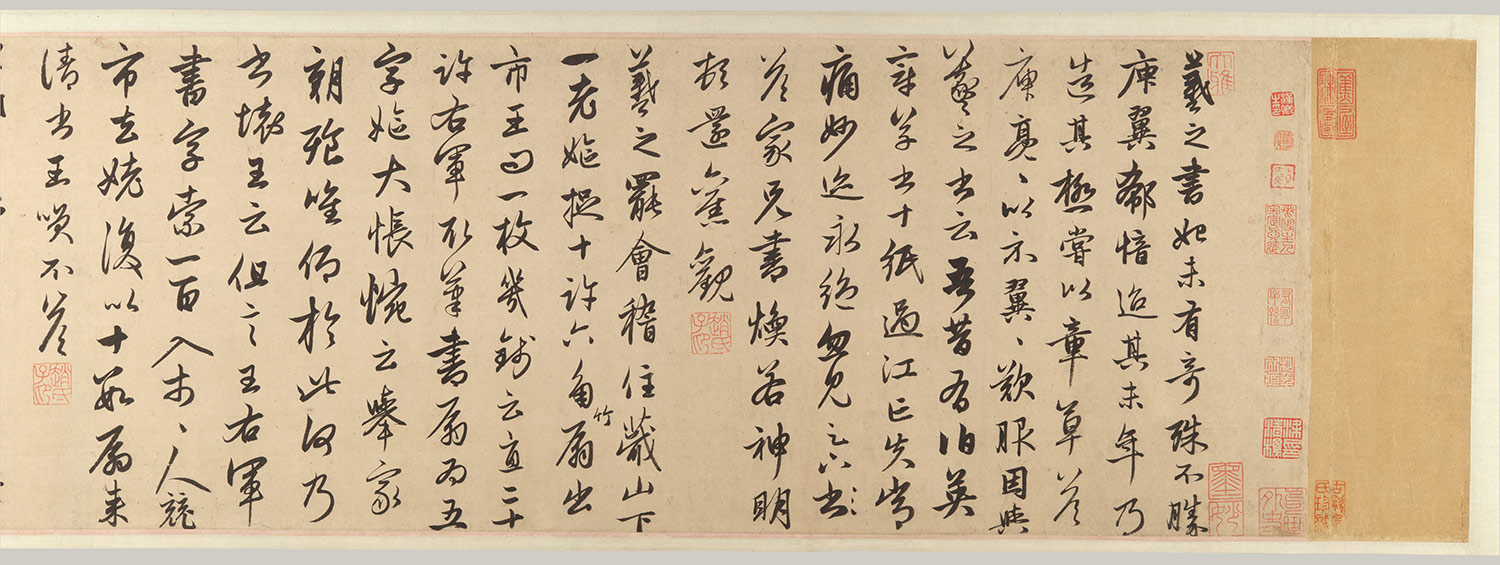 |
| Four Anecdotes from the Life of Wang Xizhi, ca. 1310 Zhao Mengfu (Chinese, 1254–1322) Source:Zhao Mengfu: Four Anecdotes from the Life of Wang Xizhi (1989.363.30) | Heilbrunn Timeline of Art History | The Metropolitan Museum of Art |
"Art served several purposes in China, functioning as magical objects, emblems of authority, signs of superior cultural refinement, mechanisms for the preservation of information, and vehicles for self-expression. As the worlds first art historian, Zhang Yan Yuan (847), stated succinctly, art helped human relations and explored the mysteries of the universe. Art, he wrote, completes culture. Patrons included members of the imperial court, noble families, high-ranking bureaucrats, and Buddhist and Daoist monasteries. However, the percentage of the population having access to visual imagery was small, not to mention the miniscule number of people who commissioned or owned works of art."--- Mackenzie, Lynn. Non-Western Art: A Brief Guide. 2nd edn. Upper Saddle River, NJ: Prentice-Hall, 2001. (86)
 |
| bi discs at the Freer/Sackler |
 |
| The David vases |


